.jpg)
The 30-share Sensex lost 22 points to close at 27,090 and the 50-share Nifty gained 7 points to end at 8,121.

Defence ministry incompetence hobbles development of battle-taxis for the Indian Army.

HR can make better hiring decisions with solutions powered by robotics & machine learning.

Textile and telecom shares have gained ahead of the Cabinet meet later today which is likely to announce new measures for both the sectors.

Rate sensitive sectors were among the top gainers with Tata Motors and ICICI Bank leading the gains on the Sensex.

Investors engaged in profit booking in the recent gainers at attractive and higher valuations.

The measures government takes next to push economic growth will be the key for automotive sector
The 30-share Sensex ended down 245 points at 28,799 and the 50-share Nifty closed down 81 points at 8,750

The 30-share Sensex ended higher by 31 points at 26,591 and the 50-share Nifty gained 10 points at 8,061.

The S&P BSE Sensex ended up 129 points at 26,843 and the Nifty50 ended up 39 points at 8,220.

Indian markets ended on a lower note after the stimulus announced by the European Central Bank (ECB) failed to meet expectation.

Broader markets are outperforming the benchmark indices- BSE Midcap and Smallcap indices are up 0.8%-1%.

Reliance Industries leads the pack of 56 Indian companies.

For deciding which vehicles are to be scrapped, the setting up of fitness centres and regulating them would be a humongous task.
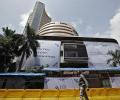
S&P BSE Midcap shed 0.8% while S&P BSE Smallcap tumbled 0.6%

Capital goods shares continued to trade firm in late noon despite weak market trend on the back of encouraging core sector growth in February.

'The growth drivers are mostly invisible, but the growth is undeniable at least for now,' notes Debashis Basu.

Shares of rate sensitive sectors such as realty, infrastructure, banking and automobiles ended higher ahead of the Reserve Bank of India (RBI) mid-quarter policy review on June 17.

'I have personally been very keen on investing in lithium ion battery technology for some time.'

With the dizzying rise in the number of Covid-19 cases in the country, India Inc has transitioned from a wait-and-watch policy to full-on emergency mode, bringing back remote and flexi work, stringent safety protocols, and allowing only essential travel. Companies - especially in metros like Delhi, Mumbai and Kolkata - that had adopted a hybrid work model during the last few months when the caseload remained low, are either switching back entirely to work-from-home (WFH), or calling skeletal staff to office on select days. Take the case of cigarettes-to-hotels major, ITC, which had been on a hybrid work model over the last few months.

Auto companies are now grappling with a slowdown in sales, triggered by pent up demand due to the COVID-led lockdown easing a bit and supply-side issues for raw material.

Both the indices ended at their highest levels since February 1.

The NSE Nifty ended 89.40 points, or 0.83 per cent, lower at 10,710.45.

The 30-share Sensex is up 253 points at 29,263 and the 50-share Nifty has gained 68 points at 8,829.

Reflecting the bearish mood, all sectoral indices, led by metal, teck and healthcare, ended in the negative zone.

Tata Motors recently cut the sales forecast of its luxury car brand, JLR, due to chip shortages, scaling down its production numbers from the earlier 120,000 units to 60,000-65,000 units by September, and leading to an almost 10 per cent fall in the company's stock. In May this year, Bosch India, too, had stated that chip shortfalls would impact its production, as supply chains were getting disrupted.

Strengthening of rules governing insider trading is among the key proposals in the agenda set by Sebi for 2018-19, along with making improvement to the Prohibition of Insider Trading Regulations (PIT) and Prohibition of Fraudulent and Unfair Trade Practices regulations.

The 30-share Sensex ended down 30.30 points at 28,161.72 and the 50-share Nifty dipped 7.95 points at 8,543.

Investors sought to book profits at attractive valuations after recent run up in last few trading sessions.

The broader Nifty ended on top of 9,800 again.

Tata Steel, SBI, Infosys and L&T were among the top gainers for the day.

The India Meteorological Department on Tuesday said the monsoon this year is expected to be 'above normal.'

To be competitive, you need to focus on building products very rapidly, says Werner Vogels.
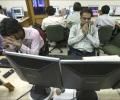
Investors were anxious concerned about the uncertainties over the timing of Us Federal Reserve rate hike, US policies under President Donald Trump, the upcoming French election and rising crude price that could impact inflation, going ahead. A weak closing in Asia tracking overnight losses in the US owing to all these unknowns triggered selling, brokers said.

On BSE, 1,826 shares declined and 982 shares rose, while a total of 194 shares were unchanged

Sensex ended strong, Tata Steel, HUL climb higher.

At the close, the 50-share NSE Nifty was at 8,611.15, up 19.90 points, or 0.23 per cent, after moving between 8,637.15 and 8,555.20.

The NSE Nifty also gained 53 points, or 0.49 per cent, to settle 10,855.15 after shuttling between 10,870.40 and 10,749.40.

Industry watchers attribute a lot of the current successes of the $6 billion Hero Group to how B M Munjal planned and executed succession in HeroCorp, balancing the interests of other family-owned businesses.

On Reva, Mahindra says electric cars are an innovation that can disrupt the automobile sector.
